I have spent most of my life in two worlds: art and education. Both depend upon curiosity, experimentation and, perhaps most importantly, the confidence to think for yourself. So I understand why the arrival of artificial intelligence has made many artists and educators uneasy. If a machine can generate an image, write an essay or suggest a creative solution in seconds, where does that leave the messy, difficult and deeply human business of learning and making?
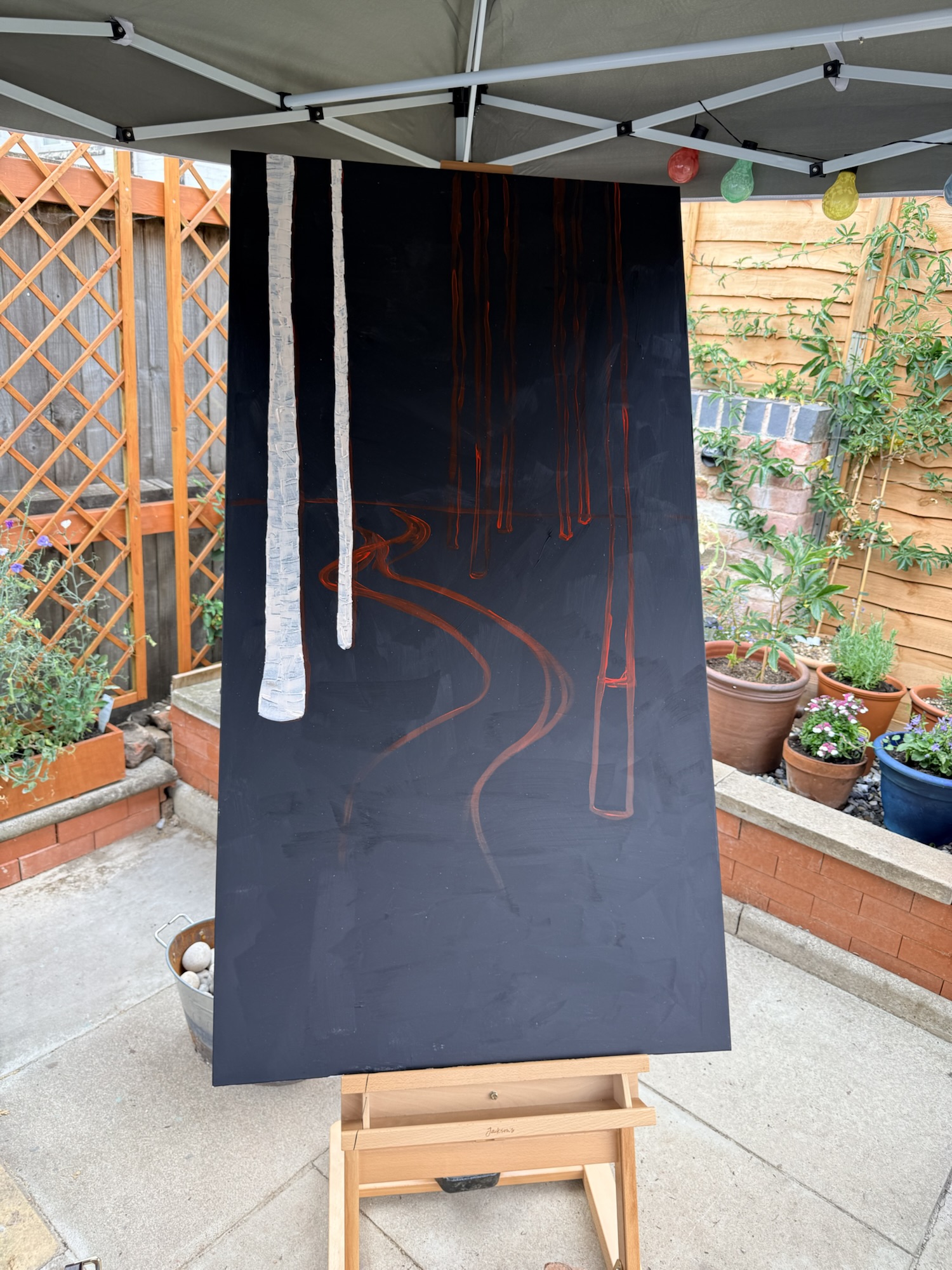
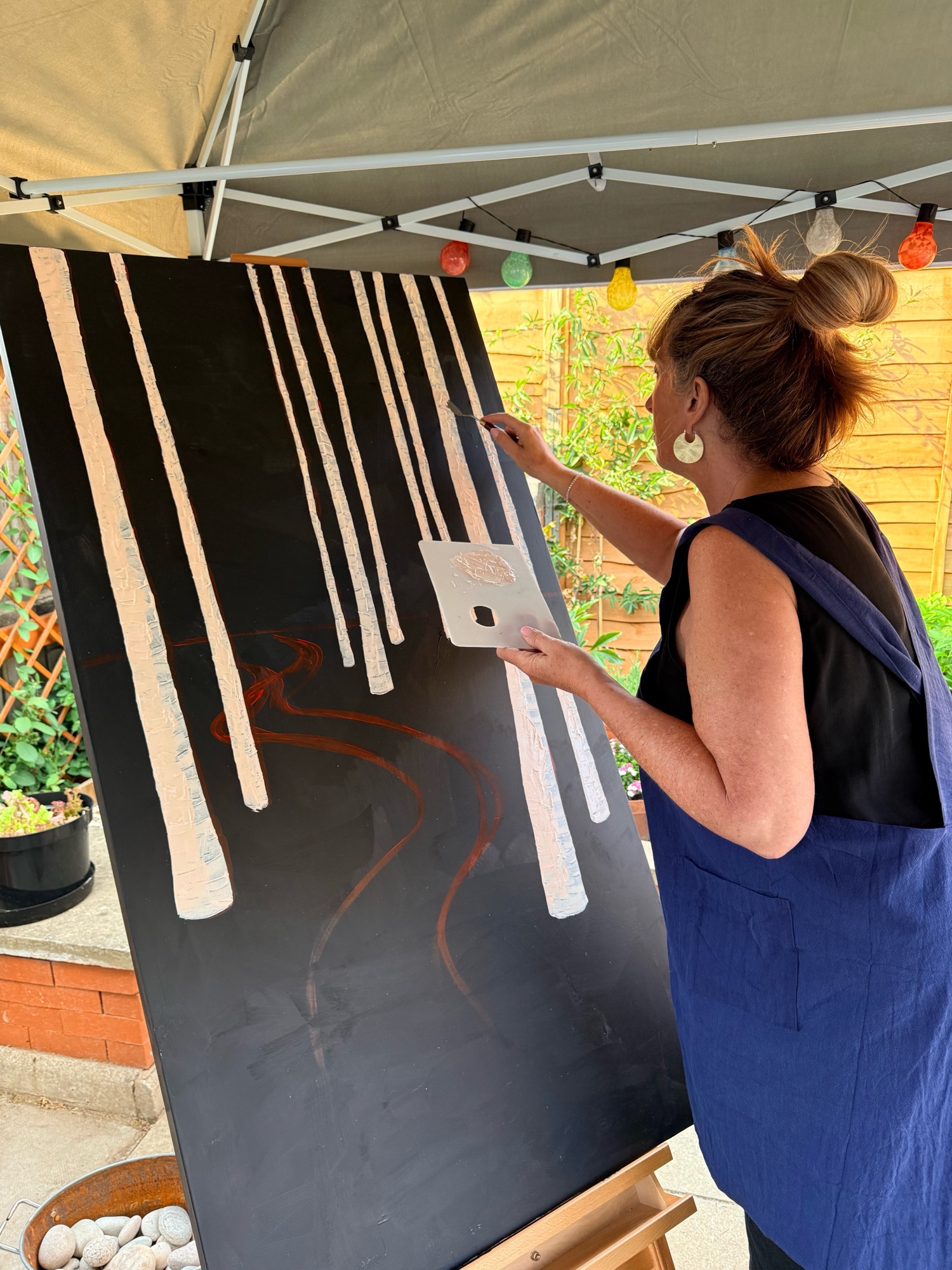
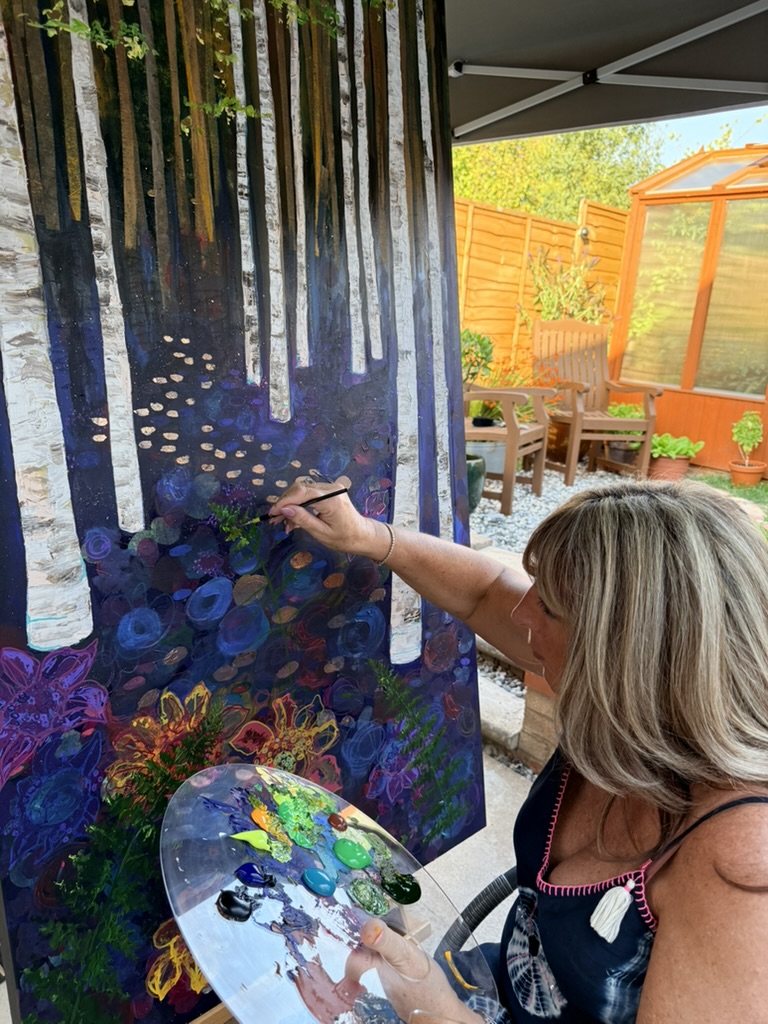
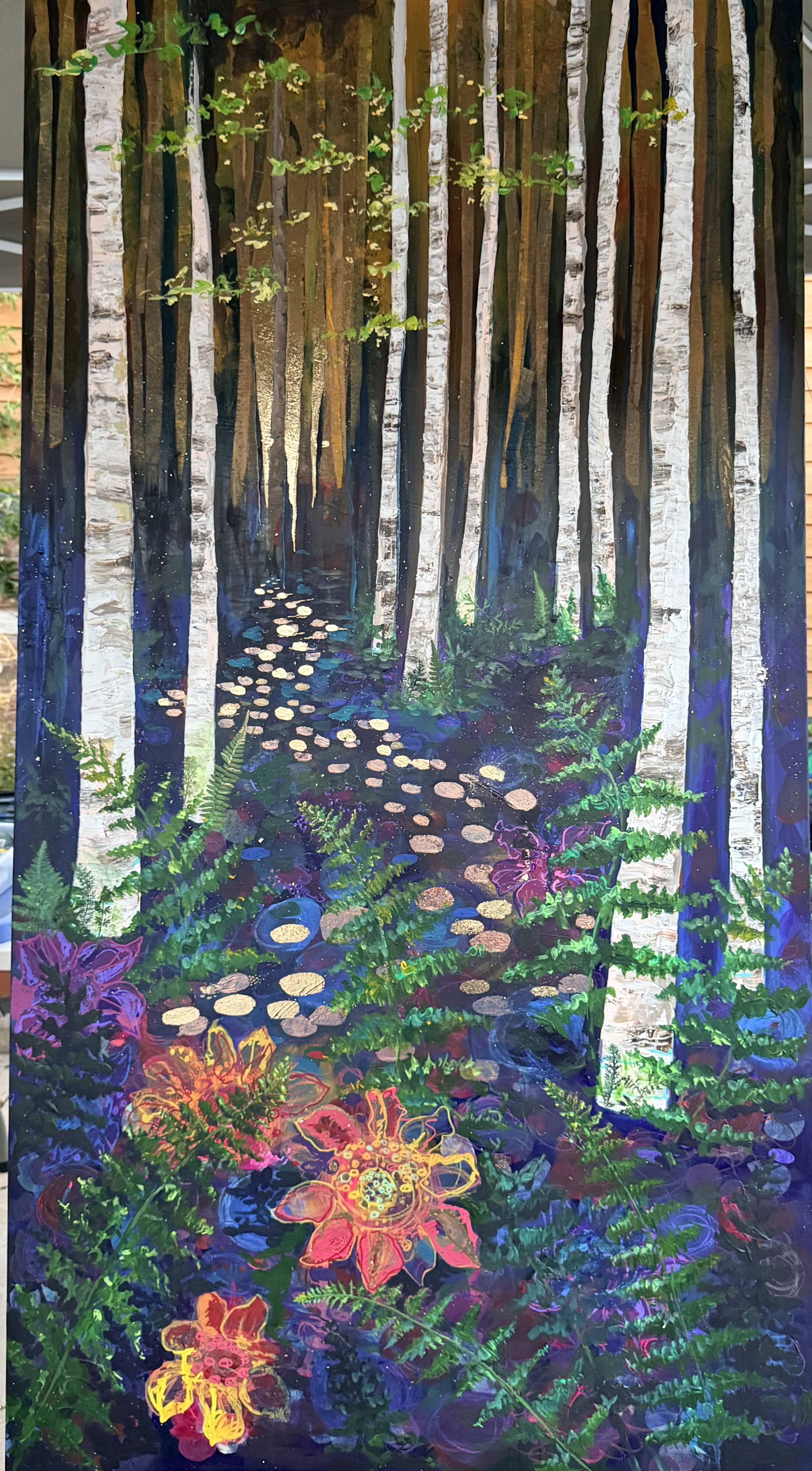
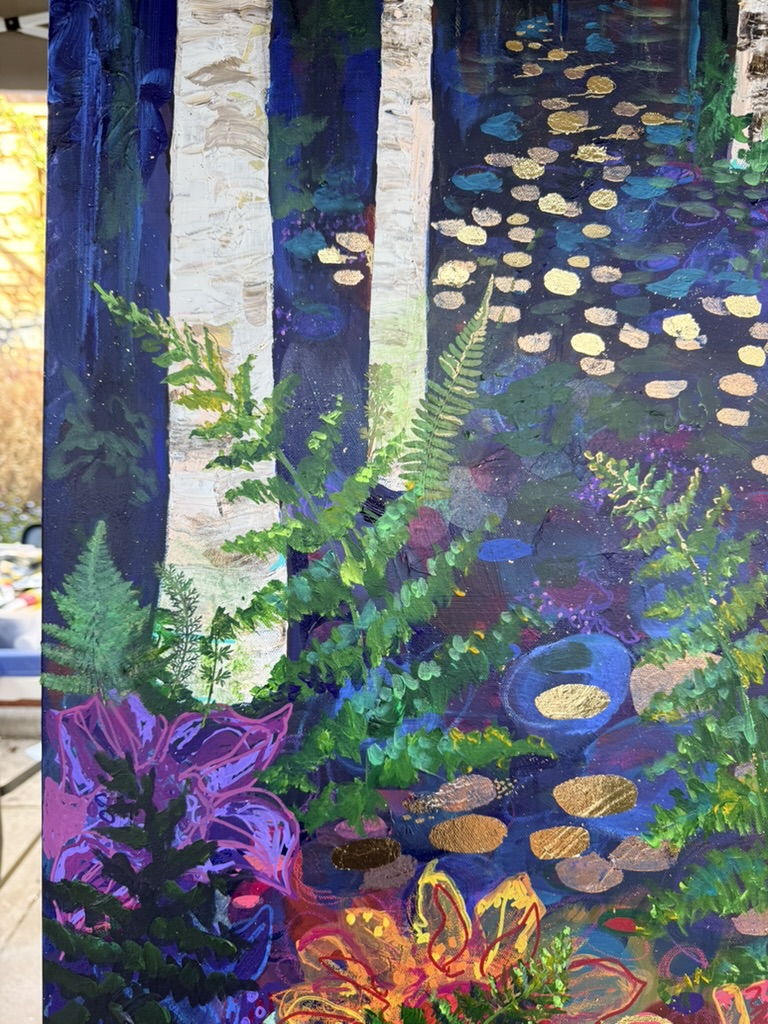
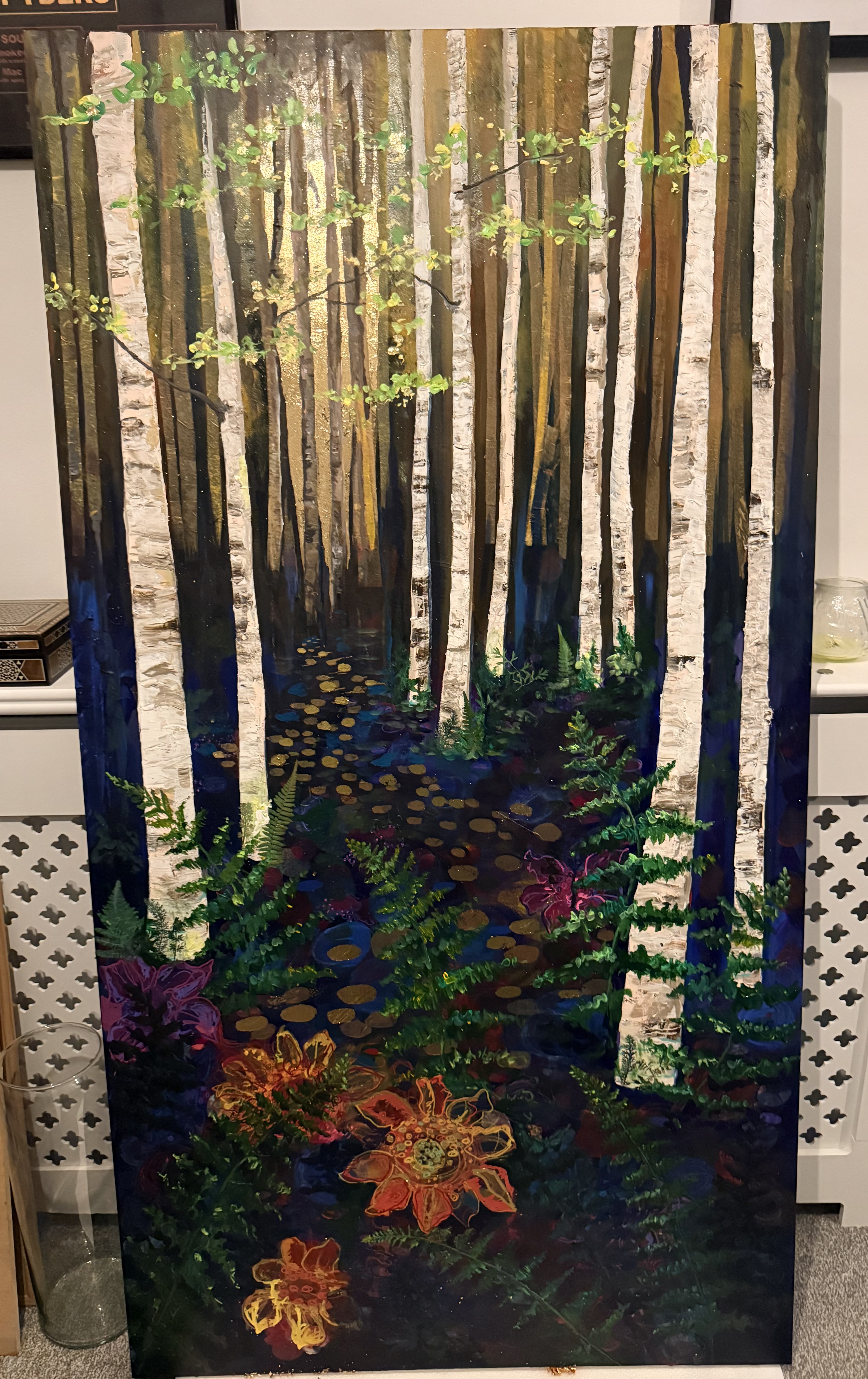
Recently, I found myself considering the question rather differently. I showed my unfinished work to AI and asked for a critique. What followed didn’t make the painting for me, it did something far more interesting: it made me look at my own painting differently. My painting is a large, highly textured woodland of silver birches, saturated colour and abstract flowers—I began using AI much as I might use another artist whose opinion I respected. I photographed the unfinished canvas and asked for a critical response.

My first stop was about colour theory. I uploaded a picture of my unfinished piece to do a colour analysis. I know that I can go a bit too wild with colour and often need to rein it in! I used Adobe Color Generator to analyse what I had already. I find that very useful as a way of seeing what I’ve got and where to go next.

Next, I wanted to know if I was on the right track with my composition. Rather than simply telling me that it looked good, the AI analysed the colour relationships, composition, areas of visual tension and the hierarchy of the marks. One suggestion was instead of adding more and more flowers to the forest floor, I should choose five or six “hero flowers” and allow the others to become supporting characters. It was such a simple observation, but I hadn’t seen it myself. I had become too close to the painting.
What happened next is important. I didn’t simply follow the instruction. I thought about it. I agreed that the painting needed greater visual hierarchy, but decided that I would develop those hero flowers using pastel rather than more paint, because I wanted to preserve the looseness and immediacy of the surface. We then discussed the gold leaf I intend to introduce later. The AI suggested restraint: rather than creating an obvious golden pathway through the forest, I could use broken fragments of gold to imply light and movement, allowing the viewer’s eye to complete the journey. Again, I may or may not ultimately follow that advice. The decision remains mine. And surely that is the crucial distinction between using AI as a substitute for creativity and using it as a tool for creative thinking.
I think that the big take-away here in terms of teaching is that AI should not be used in art education to remove the creative struggle; it should be used to make that struggle richer.
That distinction matters. Art education has never simply been about producing an attractive finished object. It is about looking, questioning, experimenting, making decisions, taking risks, evaluating outcomes and developing an individual visual language. I would argue that this is not a “cheat” any more than Caneletto’s use of the camera obscura. Every era has its technology.
If a student types a prompt into an AI image generator and submits the result as their artwork, very little of that learning necessarily occurs. But if they use AI to interrogate their own work—Why isn’t this composition working? What happens if I change the value structure? Which artists might challenge the way I’m approaching this? Give me three different interpretations of what I’ve made—then AI can become a powerful instrument for reflection.
For me, the really exciting possibility is AI as a form of perpetual studio critique. Art teachers know how valuable a good question can be.
We rarely improve a student’s work by simply saying, “Put some blue there.” We might instead ask, “Where does your eye go first? Is that where you want it to go?” AI can provide some of that dialogue whenever a learner needs it. The teacher, meanwhile, becomes even more important because students need to learn how to evaluate the advice they receive rather than automatically obey it.
AI presents us with a surprisingly similar question, albeit on a vastly more sophisticated scale. Like the camera obscura, it can extend what the artist is able to see or consider. I can show AI my unfinished painting and ask it to analyse the composition, identify weaknesses or suggest possibilities I haven’t considered. But just as the camera obscura didn’t hold the brush, AI doesn’t have to make the creative decisions. I decide whether its suggestion is useful, whether it belongs within my visual language and, ultimately, whether to ignore it altogether.
The skill our students will need in an AI world is not simply the ability to generate. It is the ability to judge.
Which idea is worth pursuing?
What is derivative?
What feels authentic?
What should be rejected?
What happens when I deliberately break the AI’s suggestion?
These are sophisticated creative decisions and link into the critical thinking that we know is a vital skill going forward.
Perhaps the challenge for art education is not to keep AI out of the studio, but to teach students that inviting it in does not mean handing it the paintbrush.